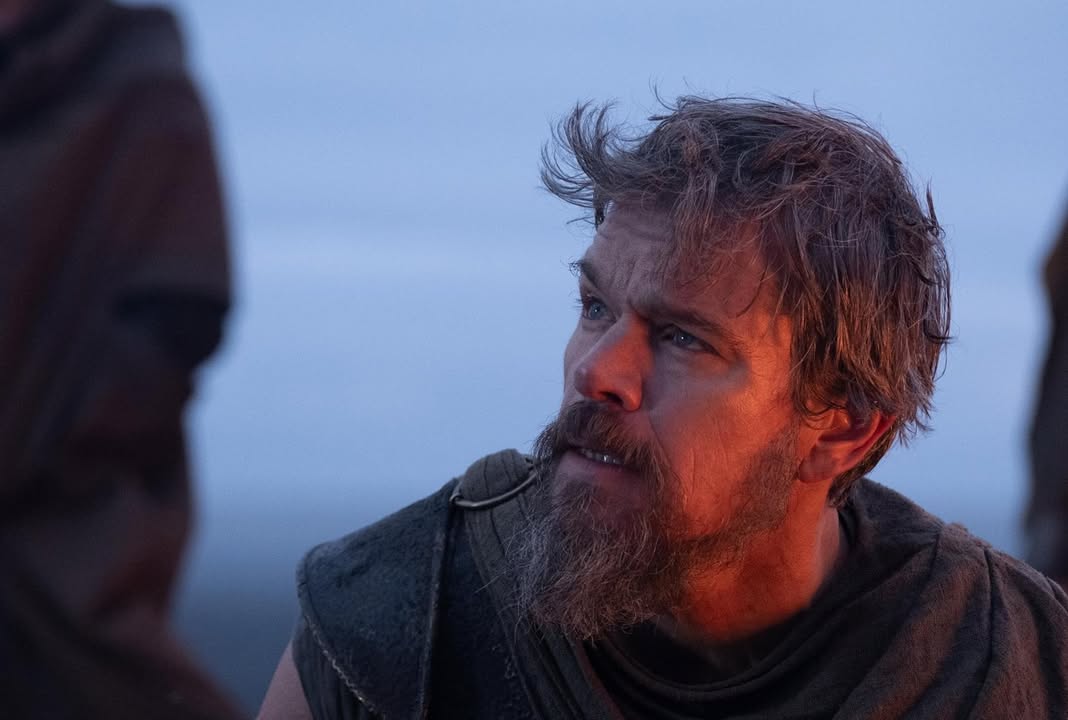
The Odyssey begins after the Trojan War, with Odysseus attempting to return home to Ithaca. What follows is a dangerous voyage through monsters, temptation and divine interference, but the real hook is simpler: how much of himself can he preserve before he gets there?
Nolan’s obsession with time, endurance and human fixation makes him a natural fit for Homer’s tale. Matt Damon plays Odysseus with a weathered, tightly controlled determination, making every victory feel costly. Tom Holland and Anne Hathaway strengthen the emotional side of the story, particularly through the separate pressures placed on Telemachus and Penelope. Their performances give the film warmth even when its scale threatens to swallow the characters whole.
Visually, it is formidable. The landscapes feel vast, hostile and physical, while the action has enough texture to avoid becoming weightless spectacle. The cinematography moves between sun-blasted grandeur and darker, more claustrophobic spaces, and the score keeps the tension simmering without flattening the quieter moments. You can feel Nolan trying to make myth tangible rather than merely impressive.
The writing is strongest when it focuses on home, identity and the cost of survival. A few stretches drag under the weight of the film’s ambition, and some supporting figures feel more symbolic than fully realised, but the emotional pull remains clear. It is serious, muscular filmmaking, occasionally a little solemn for its own good, but never lacking conviction.