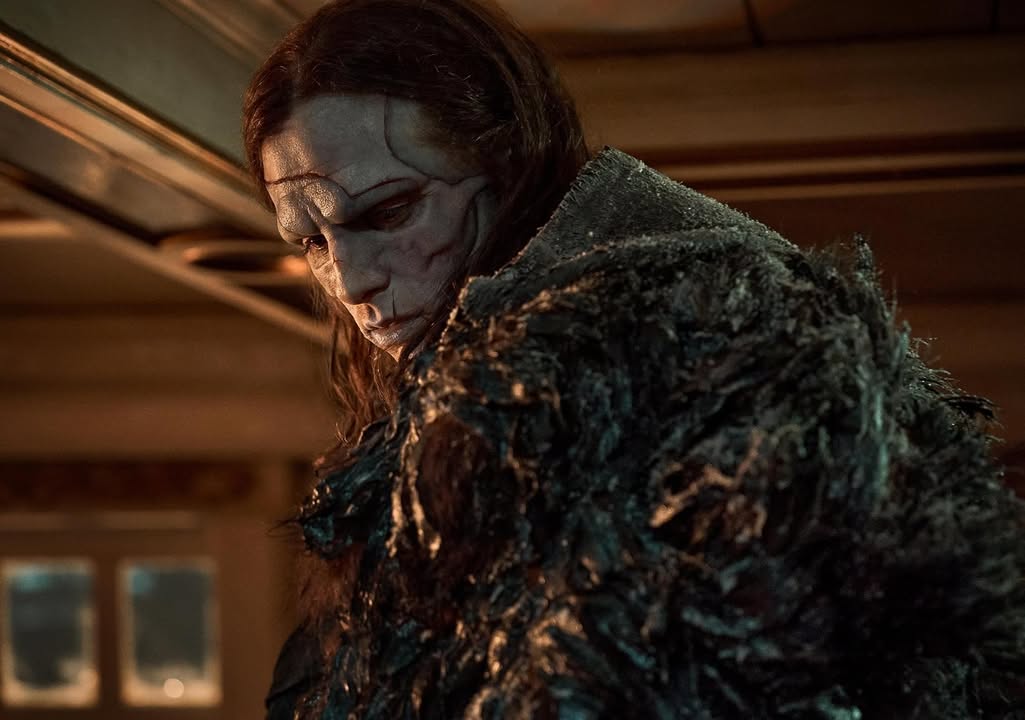
In act one, we meet Victor Frankenstein, a brilliant but deeply self-absorbed scientist who becomes fixated on conquering death itself. His experiment succeeds, at least technically, and the creature he brings into the world is not just alive, but aware. What follows is less about spectacle and more about consequence, setting the tone for a tragedy that feels inevitable from the start.
Del Toro, leaning further into dark fantasy drama than outright horror, returns to the gothic terrain he handles so well. Oscar Isaac plays Victor with a nervy intensity, all arrogance masking fragility, while Jacob Elordi’s creature is the film’s emotional centre. He’s not a monster in the traditional sense, more a wounded presence trying to understand a world that rejects him. Mia Goth adds a sharp, haunting presence that deepens the film’s emotional texture, while Christoph Waltz brings a measured, almost surgical calm to his supporting role.
Visually, it’s exactly what you’d expect from del Toro. The cinematography is rich and textured, full of shadow and candlelight, with frames that feel almost storybook in their composition. The score swells and recedes with a kind of tragic elegance, never overpowering but always guiding your emotional response.
Where it falters slightly is pacing. The film lingers, sometimes a touch too long, and you’ll feel that weight in the middle stretch. The writing, though, is thoughtful, digging into themes of creation, responsibility, and loneliness without feeling heavy-handed.
If you’re into dark fantasy with a strong emotional spine, this will stay with you. It’s less about fear, more about sorrow, and that’s very much the point.